Health & wellbeing
The annual health check
The annual health check is a free appointment offered once a year from the age of 14 to anyone on their GP practice learning disability register. The NHS page that carries the scheme says what the appointment covers, records that a practice does not have to offer it, and states where the results are written down.
Last checked on 3 September 2026
Who is the annual health check for?
The NHS page that carries the scheme states who it is for in one sentence: anyone aged 14 or over who is on their doctor's learning disability register can have a free annual health check once a year. Two parts of that sentence do most of the work. The age is 14, which is years before adult services arrive, and the door is the register held at the GP practice rather than a diagnosis handed over on the day. The page also records that the choice to have the check belongs to the person: having one is not a condition of anything else.
NHS, annual health checks for people with a learning disability, page reviewed 24 September 2025, next review due 24 September 2028, read on 3 September 2026.
The check is not the same appointment as the NHS Health Check that is offered to adults generally. That programme runs for adults aged 40 to 74, and the learning disability check starts at 14 and repeats every year rather than every few years. A practice receptionist asking about a health check appointment may mean either, which is one more reason the register is the thing to be on before the conversation starts. The appointment is one half of what the NHS is expected to provide on this front; the other half, and the December figures about both, are held together in health and wellbeing.
How do you get on the register?
By asking. The NHS page states that you can ask to go on the register if you think you have a learning disability, and that the first thing to do is check with the doctor's practice whether you or the person you care for is already on it. Registration is a recording by the practice of something about a person, not a test the practice runs, and the distinction matters: the check belongs to people on the list, so the list is where the argument is worth having.
NHS, annual health checks for people with a learning disability, page reviewed 24 September 2025, read on 3 September 2026.
What the words on that list mean, and why the same two words can carry different meanings in different documents, is the subject of what a learning disability is. It is the page to read before asking to be added, if the question of who qualifies has been answered differently by different people.
What happens at the appointment?
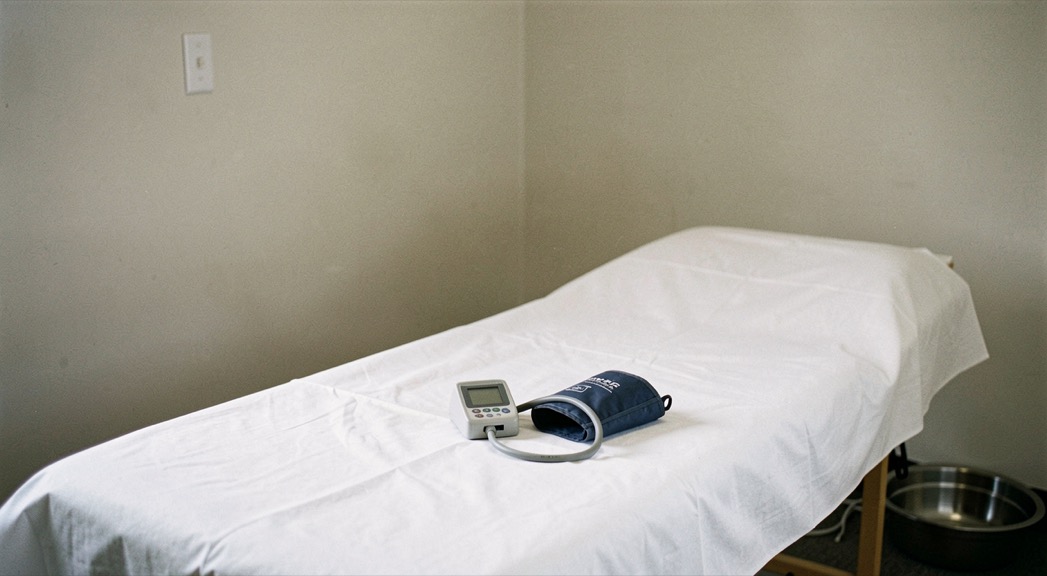
The NHS page describes a physical check-up, including weight, heart rate and blood pressure, and says a urine sample or a blood test may be asked for. Beyond the measurements, the appointment is built around the conditions the page names as the ones to ask about: epilepsy, constipation, problems with swallowing, and checks on sight and hearing. Vaccinations are reviewed to see whether they are up to date, and long-term conditions such as asthma or diabetes are followed up rather than left to another appointment that may never be booked.
NHS, annual health checks for people with a learning disability, page reviewed 24 September 2025, read on 3 September 2026.
Medicines get a question of their own. The page says the doctor or nurse will talk about medicines to make sure the right ones are being given, which is the annual opening for a review that is otherwise easy to let slide. Two other questions belong to the same appointment: whether family or carers are getting the support they need, and whether the person is content for their health information to be shared, which the page frames as a question of consent rather than a form to sign by default.
NHS, annual health checks for people with a learning disability, page reviewed 24 September 2025, read on 3 September 2026.
The page also gives the appointment a job at the boundary between children's and adults' services: helping things go well when a young person moves to adult services at the age of 18. That move is the point at which support that was arranged by someone else starts to depend on what is written down, which is why what the appointment produces matters as much as what it measures.
What is a health action plan?
It is where the appointment is supposed to land. The NHS page says the findings and the adjustments a person needs should be written down in a health action plan, or health profile. The document does two jobs at once: it carries what was checked this year, and it carries the adjustments, so that the next appointment, or a different service, starts from a record instead of from the beginning. reasonable adjustments sets out where the duty to make those adjustments comes from and what can be asked for under it.
NHS, annual health checks for people with a learning disability, page reviewed 24 September 2025, read on 3 September 2026.
A plan of that kind reaches into ordinary weeks as well as into appointments. What it says about medicines, reminders or equipment belongs to the same conversation as daily living and aids, where an adaptation or a piece of equipment is treated as a response to an assessed need rather than a purchase.
How many people actually get one?
The yearly statistics give the rate. In 2024-25, 81.5 per cent of patients with a learning disability had an annual health check, against 79.6 per cent in 2023-24. The publication, Health and Care of People with Learning Disabilities, was published by NHS England on 4 December 2025, and it counts people recorded by their GP as having a learning disability, which is to say the register rather than the population.
Health and Care of People with Learning Disabilities, 2024-25, NHS England, published 4 December 2025, read on 3 September 2026.
A rate just above eight in ten is the useful kind of number, because it says two things at once: the scheme works in most places most years, and in roughly one case in five it does not happen. Both halves are true of the same figure, and the second half is the reason the route in the next heading exists. dated notes follows the movement of that figure from edition to edition, with the date each source was opened.
What if the practice does not offer the check?
The NHS page is direct about this. A practice is invited to offer the check and does not have to, and where the answer is no, the page advises asking the local community learning disability team to help get one. That is the whole route, and it is worth knowing before the phone call: the arrangement is not a favour that depends on who answers, it is a scheme with a page, a review date and a fallback written into it.
NHS, annual health checks for people with a learning disability, page reviewed 24 September 2025, read on 3 September 2026.
What this page is
This page explains what the annual health check is and what the NHS page that carries it says. It is not medical advice about any one person, and nothing on it decides whether an individual should have an appointment. It describes England; the other countries of the United Kingdom run their own schemes.
Sources read for this page
- NHS, annual health checks for people with a learning disability, page reviewed 24 September 2025
- Health and Care of People with Learning Disabilities, 2024-25, NHS England, published 4 December 2025
- Equality Act 2010, revised text on legislation.gov.uk
Each source above was opened on 3 September 2026. Where a page here prints a section number or a figure, the source line beside it names the version that number was read from.